
The Movement Your Program Is Probably Missing
If you’ve spent months walking, running, or lifting to fix your back pain, there’s a good chance you’ve been neglecting one of the most powerful movements your body can perform: rotation. Most people focus almost exclusively on moving forward and backward. But your spine also needs to twist and turn to remain healthy, and the long-term health of your joints and discs depends on your ability to rotate with strength, control, and awareness.
Why Your Lower Back Pays the Price for Weak Rotation
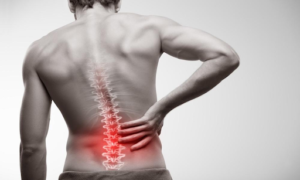
Your lower back isn’t actually designed to rotate very much. Most rotational motion should come from your hips and mid-back. When those areas are weak, stiff, or poorly trained, your lower back is forced to compensate. That’s when torsional stress builds, joints become irritated, and discs become vulnerable. One of the most common ways people injure their lower back is by bending forward and twisting at the same time while lifting. This combination of spinal flexion and rotation is responsible for countless disc injuries, and it’s a risk that can be dramatically reduced by training your body to rotate correctly.
What Changes When Clients Finally Slow Down
When I coach clients through exercises for lower back pain, such as the cable twist, they almost always rush the movement and rely on momentum instead of control. Once they slow down, focus on their breathing, and stay present with the resistance, everything changes. They begin to feel the muscles of the abdomen, hips, and spine working together as a system instead of fighting each other.
This restores proper load sharing between the hips and spine, improves mobility, and reactivates muscles that may have been dormant for years. For many people, rotational training turns out to be the missing link in their entire rehabilitation.
Two Foundational Rotational Movements to Add
- Spinal Twist (Cable or Resistance Band): With your feet facing forward, keep your pelvis stable while your torso rotates. This encourages rotation through the mid-back and hips rather than the lower back, and driving force from the ground up at the end of the movement creates a safe, full-body rotation pattern.
- Kneeling Rotation (Bodyweight): From a half-kneeling position with both knees bent at ninety degrees, engage your abdomen and keep your hips stacked beneath you. Initiate the movement by activating the back hip and letting that force travel upward through the spine into the torso.
Start with awareness. Notice how you twist, reach, and turn throughout your day. Then intentionally strengthen that pattern, slowly and under control. Strength isn’t about how much you can move. It’s about how well you control it.
Your Next Step
If your current routine only trains you to move straight ahead, it may be time to add the piece that’s been missing.
Learn how rotational training fits into a complete recovery plan at shawnrobek.com/consultation.