The Tool You’re Probably Not Using
When people think about fixing back pain, breathing exercises for back pain usually aren’t the first thing that comes to mind. Stretching, adjustments, and strength work tend to get all the attention. But your breathing pattern has a direct line to your nervous system, and your nervous system determines how much tension your back muscles are holding onto at any given moment.
Why Shallow Breathing Keeps Your Back Guarded
Most people breathe shallowly from their chest, especially when they’re stressed, in pain, or sitting at a desk for hours. Chest breathing keeps your body in a low-grade, sympathetic “fight or flight” state, which tells your muscles, including the ones surrounding your lower back, to stay braced and guarded. Over time, that constant guarding contributes to stiffness, restricted movement, and heightened sensitivity to pain.
How Diaphragmatic Breathing Changes the Equation
Diaphragmatic, or belly, breathing engages your diaphragm fully and activates your parasympathetic nervous system, the part responsible for rest and recovery. This signals to your body that it’s safe to release unnecessary tension, including the protective guarding your lower back muscles may have been holding for weeks or months without you even realizing it.
A Simple Breathing Routine to Start Today
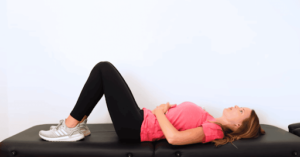
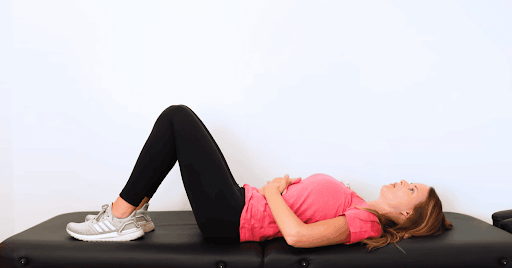
- Lie on your back with your knees bent, feet flat on the floor, one hand on your chest and one on your belly.
- Inhale slowly through your nose for a count of four, focusing on expanding your belly rather than your chest.
- Hold gently for a count of two.
- Exhale slowly through your mouth for a count of six, allowing your belly to fall and your body to soften.
- Repeat for five minutes, ideally once in the morning and once before bed.
Pair Breathing With Movement, Not Instead of It
Breathing work isn’t a replacement for walking with intention, correcting your lifting mechanics, or addressing internal health. It’s the piece that helps your nervous system cooperate with all of that other work instead of working against it. A body that feels safe and regulated moves more freely and heals more completely than one stuck in constant guard mode.
Your Next Step
Calming your nervous system is one of the fastest, lowest-effort changes you can make, and it supports every other part of your recovery.
Learn how mental performance training fits into our full recovery system at shawnrobek.com/course, or
book a consultation to build a complete plan around your specific pain.