The Machine’s Real Name Tells You Everything
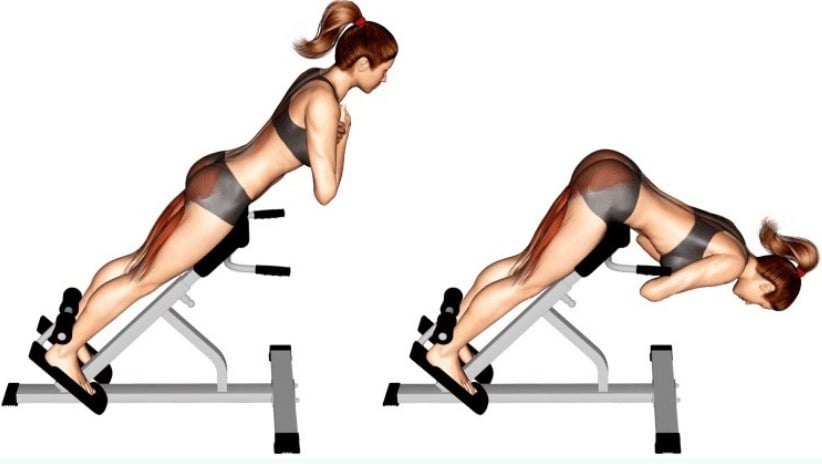
You know the one. You lock your ankles into the restraints, fold over the hip pads, drop your body forward for a deep stretch, then aggressively arch your spine upward into extension, sometimes holding a weight plate against your chest for good measure.
Here’s the truth: when used correctly, this piece of equipment can be one of your best lower back rehabilitation tools. When used incorrectly, it can do far more harm than good. The machine’s official name is the Glute-Ham Developer, or GHD. It was designed to strengthen the glutes and hamstrings. Nowhere in that name does it say “back extension machine,” yet the overwhelming majority of people use it to repeatedly flex and hyperextend their spine.
Why the Common Way People Use It Causes Injury
Most people round their lower back at the bottom of the movement and relax the muscles that stabilize the spine, then contract their lower back muscles aggressively on the way up, often rising well above parallel and forcing the spine into hyperextension. This creates excessive compression on the facet joints and increases pressure on discs that may already be irritated or degenerated.
It can feel like a good exercise at first, with a satisfying stretch at the bottom and a strong contraction at the top. That sensation is misleading. If you’re holding a weight plate while doing this, you’re compounding the stress and accelerating the breakdown of spinal tissue.
How the Movement Should Actually Be Performed
The GHD is designed to strengthen your glutes and hamstrings through movement, while your lower back works isometrically, meaning it stabilizes without moving. The movement should begin with a hip hinge, not a rounding of the spine, the same hinge pattern you’d use in an air squat or deadlift.
- Initiate the movement with a hip hinge, not spinal rounding.
- Lower your torso under control while maintaining a long, stable spine, pausing briefly at the bottom.
- Use your glutes and hamstrings to lift your torso, and never rise above parallel. Aim to stay about 15 degrees below parallel.
- Imagine a cable gently pulling the crown of your head forward to help lengthen your spine throughout the movement.
The Golfer Who’d Been Making It Worse for Years
I once worked with a man in his mid-60s, an avid golfer who consistently developed right-sided lower back pain after every round. His MRI showed severe degeneration of the facet joints along with spinal stenosis. When I asked about his gym routine, he described folding over the pads and aggressively arching backward, often feeling sharp pain that radiated into his glute. He kept doing it anyway because it felt like one of the few exercises that directly worked his back.
Once I explained the anatomy and showed him how that exact movement was compressing the area we needed to decompress, we didn’t eliminate the exercise. We modified it. Using the same machine, we turned a compressive movement into a decompressive one. His response was the one I hear constantly in my office: “Why hasn’t anyone told me this before?”
Your Next Step
If an exercise you thought was helping your back might actually be working against you, let’s take a closer look together.
If you need coaching support to fix your form, see our virtual coaching resources at shawnrobek.com/resources, or
book a consultation for a personalized plan.